Prehospital Emergency Care
Integrated Systems for Effective First Response
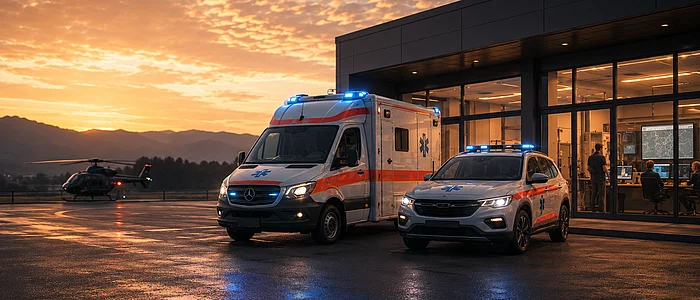
Prohospital emergency care today goes far beyond the provision of ambulances and simple transport. Effective solutions are built as integrated operational systems combining vehicles, medical equipment, infrastructure, training and coordination.
The objective is to create reliable, locally adapted systems that ensure fast response times, safe patient care and long-term operational sustainability across a wide range of environments and local situations.
Tailored Vehicle Solutions
A key strength of prehospital systems is the ability to adapt vehicles precisely to real operational needs.
Ambulances and special medical vehicles are configured based on:
- Medical protocols and treatment workflows
- Road, terrain and climate conditions
- Available personnel, qualifications and training levels
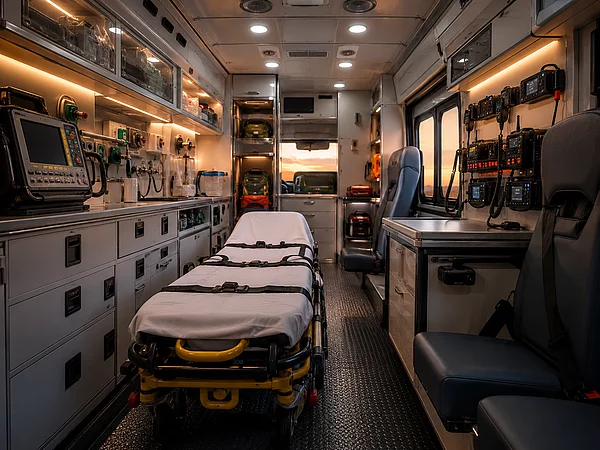
Interior layouts, storage concepts, patient handling, power supply, communication systems, climate control and onboard mobile medical equipment are individually designed and specified.
The result: purpose-built vehicles instead of standardized products.

Coordination & Dispatch Infrastructure
In addition to vehicles, complete systems include:
- Emergency call centers
- Dispatch and coordination units
These form the operational backbone of emergency response networks, enabling:
- Structured call intake and priorization
- Efficient dispatching
- Real-time coordination and fleet monitoring
This significantly improves response quality and operational performance across cities, regions and national systems.
Resilience Through Local Capability
To reduce dependency on external supply chains, systems can include:
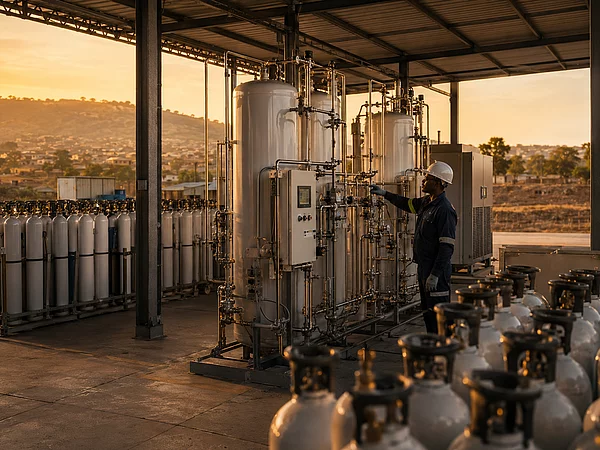
- Local medical oxygen generation and bottling
- Local vehicle assembly and technical infrastructure
- Training and service capabilities on site
This creates resilient and scalable emergency systems that can grow with future demand.
How ELLA can help you
Let’s talk about your needs
Are you looking to further develop your disaster response or civil protection capabilities?
Whether it’s evacuation, mobile medical care, modular units, operational logistics, or scalable response systems: the key is finding the solution that best fits your region, infrastructure, and operational realities.
Please briefly describe your current situation, your requirements, or your project idea using the form. Andreas Ploeger will personally review your inquiry and get back to you as soon as possible to discuss potential next steps.