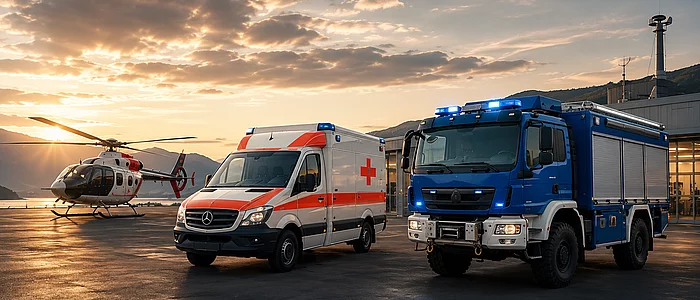
Emergency Systems that Work in Reality.
ELLA Emergency helps public authorities, regional bodies, organisations and private organisations to identify their actual needs in the areas of rescue services, emergency care, disaster management, specialist vehicles and mobile medical infrastructure. Real-world requirements are translated into structured project profiles — and provide access to suitable manufacturers, technology partners and implementation partners.
ELLA Emergency designs integrated, scalable systems built around real-world conditions.
From initial concept to implementation, we ensure that emergency solutions are operational, sustainable and adaptable from day one.

Not every project needs more vehicles. Sometimes, what’s needed is a better solution.
Many projects start with a specific product idea: additional ambulances, new emergency vehicles, mobile clinics, specialised vehicles or medical equipment. In practice, however, it often turns out that the actual need is quite different.
A region may not simply need several new ambulances, but rather mobile medical facilities that can be deployed flexibly between different locations. A pilot project can be implemented by a specialist manufacturer, whilst a larger industrial partner is required for subsequent series production.
ELLA Emergency helps to clarify precisely these issues before procurement — so that budgets are used effectively, wrong decisions are avoided and solutions are developed that work under real-world local conditions.
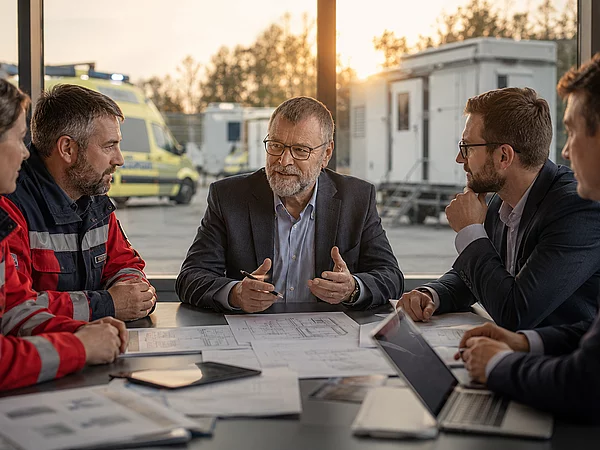
ELLA connects buyers with the right manufacturers
ELLA Emergency acts as an interface between organisations with specific requirements and manufacturers offering suitable technical, medical or industrial solutions.
On the one hand, there are public authorities, regional bodies, ministries, operators, emergency services, institutions and private organisations. On the other hand, there are manufacturers of ambulances, emergency vehicles, mobile medical units, specialist vehicles, equipment and supporting infrastructure.
ELLA brings these parties together – but not on the basis of a product catalogue. First, we clarify exactly what solution is required. We then identify manufacturers, technology partners and other project stakeholders who are suited to the specific task, the scope of the project and the scalability requirements.
The ELLA approach: understand first!
ELLA stands for Emergency Liasion for Local Adaptation. The approach does not start with a finished product, but with a deep understanding of local conditions. These include infrastructure, personnel, qualifications, medical requirements, operational realities, coordination, maintenance, budget and long-term development.
This analysis yields a clear requirements profile. It describes the technical, medical, operational and economic components that a viable solution should include.
This ensures, an initial idea is transformed into a solid basis for discussions with manufacturers, partners, funding bodies and decision-makers.
From Need to Viable Project
Solutions for complex requirements
Pre-hospital emergency care
ELLA Emergency supports public authorities, regions and organisations in developing pre-hospital emergency care as an integrated, locally adapted system comprising vehicles, medical equipment, coordination, training and infrastructure.
Civil Defense & Disaster Relief
ELLA provides support for civil protection and disaster management solutions – from evacuation and specialist vehicles to mobile clinics and modular systems.
Special Vehicles
ELLA provides support for specialist rescue and emergency vehicles – from 4x4s and armoured platforms to mission-specific solutions.
Fire fighting
ELLA supports regions in developing fire service solutions for challenging terrain, limited water supplies and decentralised operational structures.
Support Systems
ELLA provides support for emergency care systems – from call and dispatch centres to oxygen generation, bottling and local infrastructure.
Medical Equipment
ELLA provides medical equipment for rescue and emergency care – from defibrillation and ventilation to monitoring and mobile equipment kits.
Local Assembly & Manufacturing
ELLA supports the establishment of local assembly and manufacturing facilities for ambulances – through CKD concepts, quality control and scalable localisation.
Training
ELLA helps to develop sustainable training programmes for emergency services – ranging from medical training to vehicle maintenance and technical operational readiness.
Financing
ELLA helps to structure scalable financing solutions – from small-scale project launches to modular expansion and partner financing.
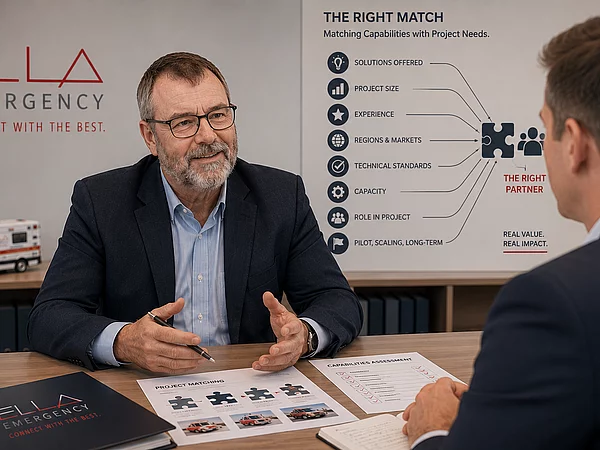
For manufacturers and suppliers: targeted projects rather than random contacts. Interested in partnering with ELLA?
ELLA Emergency works not only with public authorities, regional bodies and organisations, but also with manufacturers, suppliers and implementation partners in the field of emergency and response systems.
In doing so, ELLA carefully assesses the services, capacities and experience a company brings to the table — and determines for which project requirements, markets or project phases these can be effectively utilised. This ensures that we do not establish random contacts, but rather qualified connections between real needs and suitable companies.
Whether it’s ambulances, specialist vehicles, mobile clinics, medical equipment, dispatch systems, training, local assembly or financing: ELLA brings companies into the picture where their solutions offer genuine added value.
Find out more for manufacturers and partners
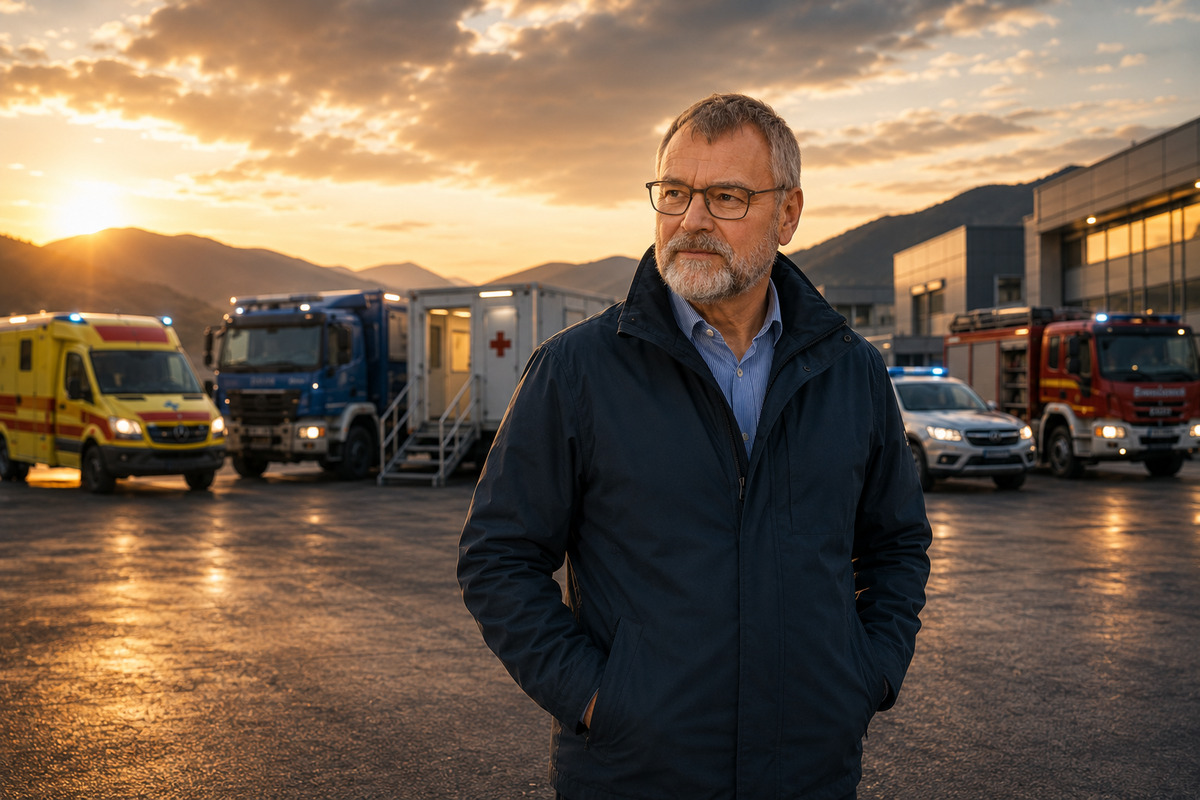
Experience Behind the Approach.
ELLA Emergency is driven by practical project experience across international emergency and healthcare environments.
The venture is led by Andreas Ploeger, a highly experienced individual with a long-standing leadership role at one of Europe’s most prominent ambulance and special vehicles manufacturer and international engineering and manufacturing experience of more than 40 years.
This background shapes a clear understanding of:
- How systems perform under real conditions
- Where standard approaches fall short
- How to translate requirements into workable, scalable solutions
The result is a hands-on, implementation-focused approach that goes beyond theoretical planning.